

By a Senior Tech Reviewer
I still have my Humane AI Pin. It sits in a drawer of shame, right next to my Rabbit R1 and my Google Glass Explorer Edition. Sometimes, on quiet nights, I open the drawer just to make sure they aren’t overheating.
2024 was the “Year of the Flop” for AI hardware. We were promised a post-smartphone future. We were promised devices that would liberate us from screens. Instead, we got $700 lapel pins that couldn’t set a timer, burned a hole in our shirts, and told us the wrong weather.1
But 2025 was different. The industry learned a hard lesson: Don’t try to kill the iPhone. Just try to keep it in the pocket.
This year, the focus shifted from “Standalone Gadgets” to “High-Bandwidth Accessories.” I have spent the last month living with the three contenders that claim to finally make AI wearable: the Meta Ray-Ban Orion, the Limitless Pendant, and the looming shadow of Apple’s unreleased AirSpecs.
Are they useful? Surprisingly, yes. Are they dystopian? Absolutely.
Here is the verdict on the second wave of AI hardware.
1. The Winner: Meta Ray-Ban “Orion” (Gen 3)
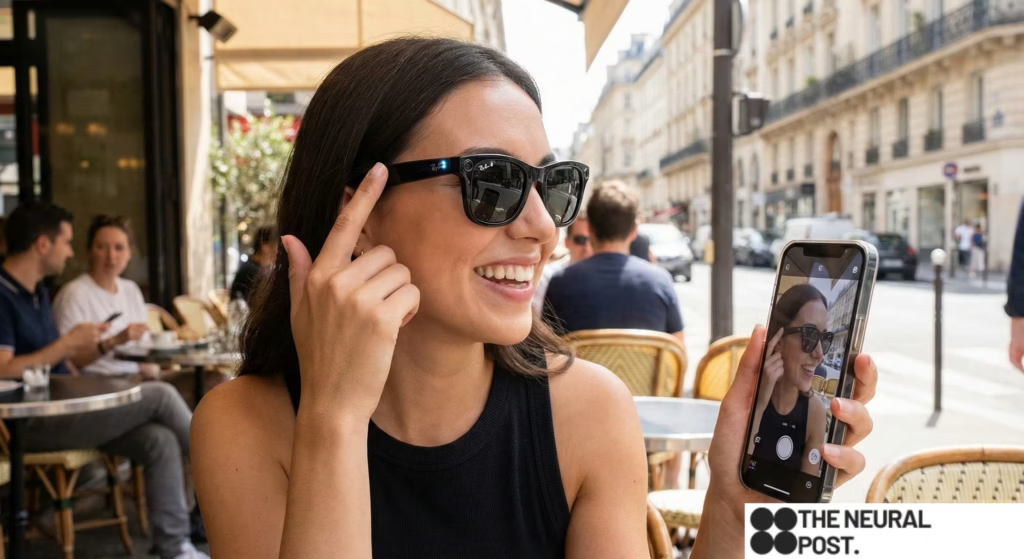
If the Humane Pin was a thesis statement, the Meta Ray-Bans are a pop song. They don’t try to be smart; they try to be cool. And that is why they are winning.
The Hardware:
The Gen 3s look exactly like Wayfarers. But the arms are slightly thicker, packing the new Snapdragon AR2 Gen 2 chip. The biggest change isn’t the glasses, though. It’s the wristband.
Included in the box is the “Neural Band”—a thin silicone strip that detects electromyography (EMG) signals from your wrist.2
The Experience:
In 2024, you had to say “Hey Meta, look at this…” like a dork in public.
In 2025, you just look.
The wristband tracks your intention. I look at a QR code, make a microscopic “pinch” gesture with my fingers, and the glasses open the link on my phone.
I look at a menu in French. I pinch. The translation is whispered into my ear.
The “Multimodal” Test:
I was fixing my espresso machine. A valve was leaking.
I looked at the valve and whispered: “What size wrench do I need for this?”
The glasses snapped a photo, processed it via Llama 4-Vision (Distilled) running on-device, and replied instantly: “That’s a 12mm hex nut. You’ll need a socket wrench, not a spanner.”
The Verdict:
The latency is gone. The friction is gone. It doesn’t replace my phone; it gives my phone eyes. It is the first piece of AI hardware I actually miss when I take it off.
Score: 9/10 (Points deducted for the creepy red LED that blinks when recording).
2. The Specialist: The Limitless Pendant (Now “Meta Memory”)
Editor’s Note: Following Meta’s acquisition of Limitless AI earlier this month, the “Pendant” is currently in limbo, but existing units are still supported.3
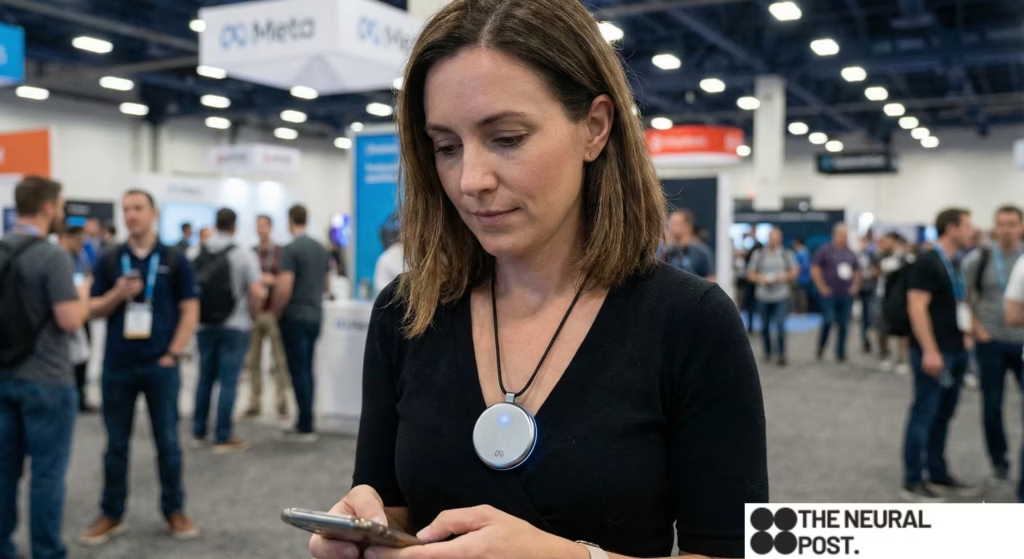
This device is the spiritual successor to the Rewind Pendant.4 It is a small, magnetic disc you wear on your shirt. It has no camera. It just has a microphone and a terrifyingly good battery.
The Promise:
It records everything you hear, everything you say, and transcribes it into a searchable “Second Brain.”5
The Experience:
I wore this during a brutal week of CES planning meetings.
Usually, I take frantic notes. With the Pendant, I just sat there.
After a 3-hour strategy session, I tapped the app: “Draft a follow-up email to Sarah listing her action items.”
The AI correctly identified Sarah’s voice (diarization), extracted her three promises, and wrote the email. It even noted the tone: “Sarah seemed hesitant about the Q3 budget.”
The “Privacy” Anxiety:
The utility is undeniable. I felt like I had a superpower. I never forgot a name. I never forgot a detail.
But socially? It’s a grenade.
People notice the light. They ask, “Is that recording?”
I found myself taking it off for “off the record” coffees, which made those conversations feel even more secretive.
The fact that Meta now owns this data makes it a hard sell for enterprise users, despite the “Private Cloud” assurances.
The Verdict:
It is the ultimate tool for corporate survival. But wearing it makes you feel like a narc.
Score: 7/10 (Utility is 10/10, Social Cost is High).
3. The “Ghost”: Apple AirSpecs (Preview)
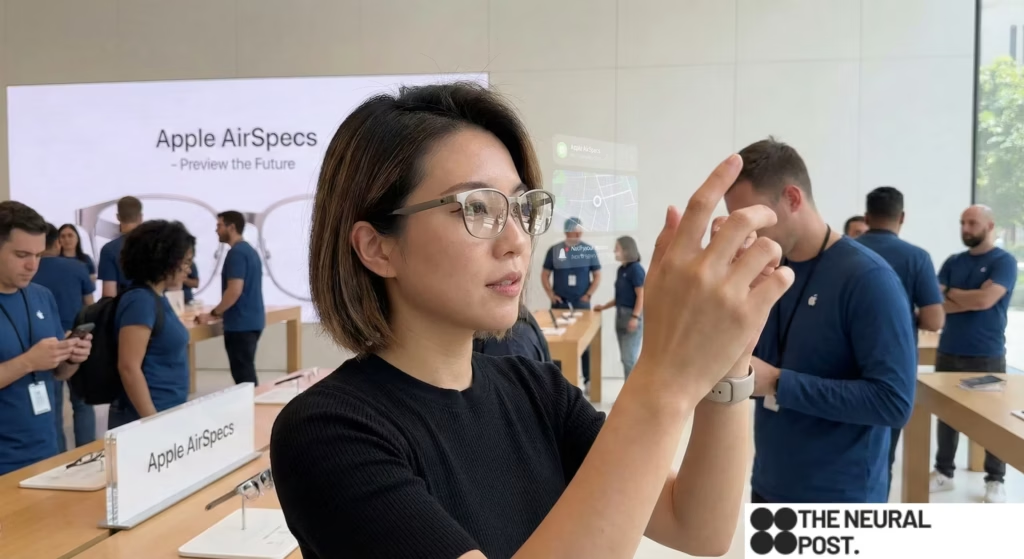
Apple hasn’t shipped yet. But their “Developer Preview” leaks tell us exactly what they are doing.
They aren’t doing cameras. They aren’t doing “Memory.”
They are doing HUD (Heads-Up Display).
While Meta wants to see the world, Apple wants to label it.
The rumored AirSpecs project arrows onto the street. They float notification bubbles next to people’s heads. They are purely visual.
Why this matters:
The Meta glasses are audio-first. If you are in a loud bar, they are useless.
Apple is betting that we want subtitles for reality.
If the rumors of the “Siri + LLM” integration are true, Apple might win the “Passive” war.
“Siri, highlight the vegan options on this menu.” And suddenly, the menu glows green in your vision.
The Conclusion: Friction was the Enemy
Why did the Humane Pin fail? Because it added friction. It forced you to use a laser projector on your hand. It forced you to speak commands. It was harder than just pulling out your phone.
The winners of 2025 succeeded because they removed friction.
Meta Ray-Bans: Removed the friction of taking a photo.
Limitless: Removed the friction of taking notes.6
We don’t want a “Smart Companion.” We don’t want to have a conversation with an Operating System (sorry, Her fans).
We want superpowers. We want to see better, hear better, and remember better.
The phone is safe. It’s not going anywhere.
But for the first time in a decade, I’m actually excited to put something else in my pocket. Or rather, on my face.