

By a Creative Director | December 28, 2025
Three years ago, if you walked past my office at 11:30 PM on a Tuesday, you would have seen a broken man.
I was a Creative Director at a mid-sized ad agency, and I was deep in the “Stock Photo Mines.” We had a pitch the next morning for a regional bank. The client wanted to convey “modern, diverse, friendly professionalism.”
I had spent four hours on Getty Images and Shutterstock, scrolling through thousands of photos. You know the ones. The models with smiles too wide, high-fiving over a laptop that isn’t turned on. The lighting that is somehow both too bright and depressingly beige.
I found one decent shot. A diverse team, natural lighting, good energy. The price tag for global, perpetual usage across digital and print? $1,800.
My budget for the entire pitch deck was $500.
I ended up using a cheaper, worse photo where the guy in the foreground looked suspiciously like he was being held hostage. The client hated it. We lost the pitch.
Last Tuesday, I had the exact same brief for a different client.
I didn’t open Getty. I opened Nano Banana Pro, Google’s creative image model.
I typed: “A candid, documentary-style photo of a diverse corporate team laughing during a brainstorming session in a sunlit, modern office. One woman has natural curly hair and is wearing a blazer in hex code #0047AB. The vibe is warm, energetic, and authentic. Film grain.”
Four seconds later, Nano Banana spat out four variations. They were perfect. The lighting was dynamic. The smiles reached their eyes. The blazer was the exact shade of the client’s logo.
Total cost? About $0.04 in compute credits.
I put it in the deck. The client loved the “authenticity” of the imagery. We won the business.
And just like that, I knew an entire industry was dead.
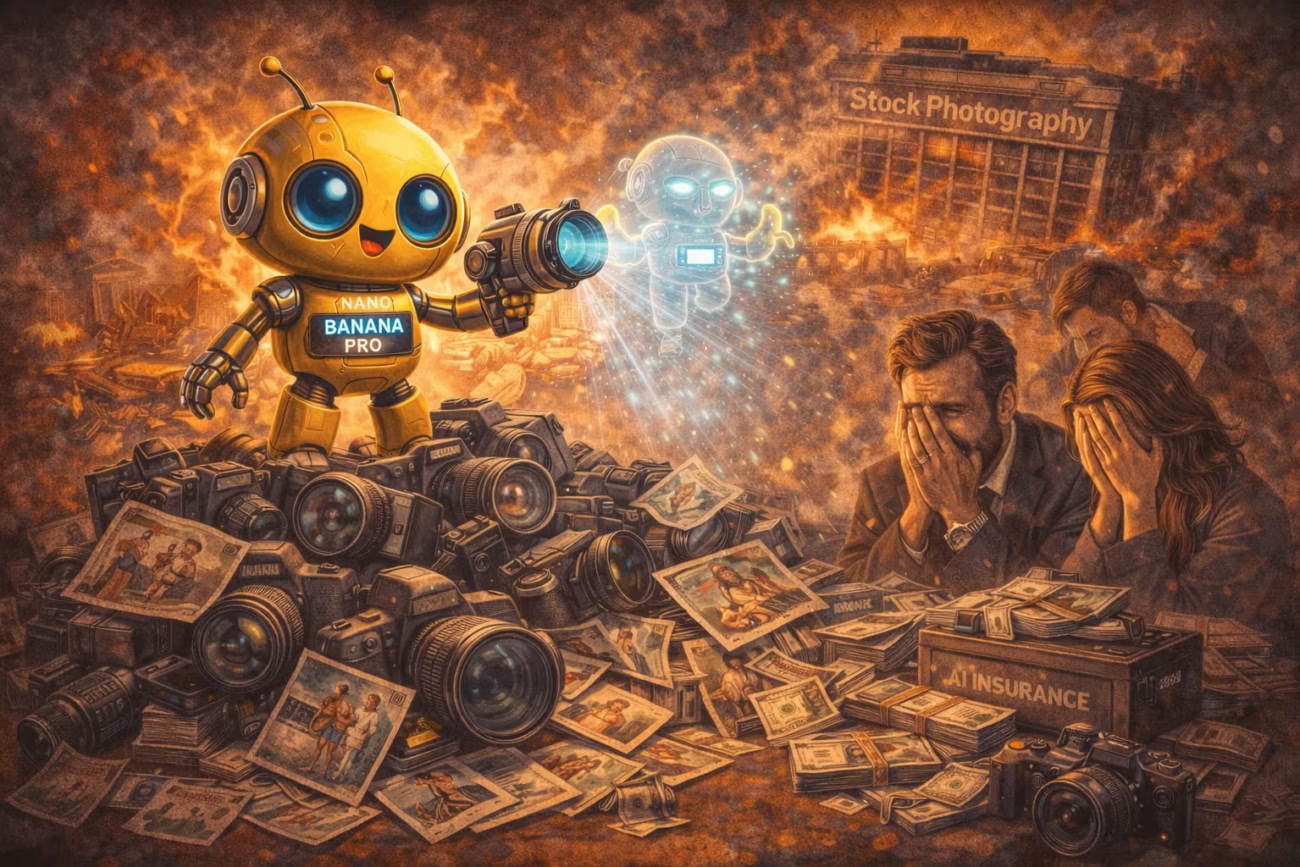
We aren’t just seeing a new tool enter the creative workflow. We are witnessing the complete vaporization of the $4 billion stock photography market. The traditional model of hiring photographers, renting studios, hiring models, uploading photos, tagging them, and licensing them is economically obsolete.
It was killed by a cartoon banana.
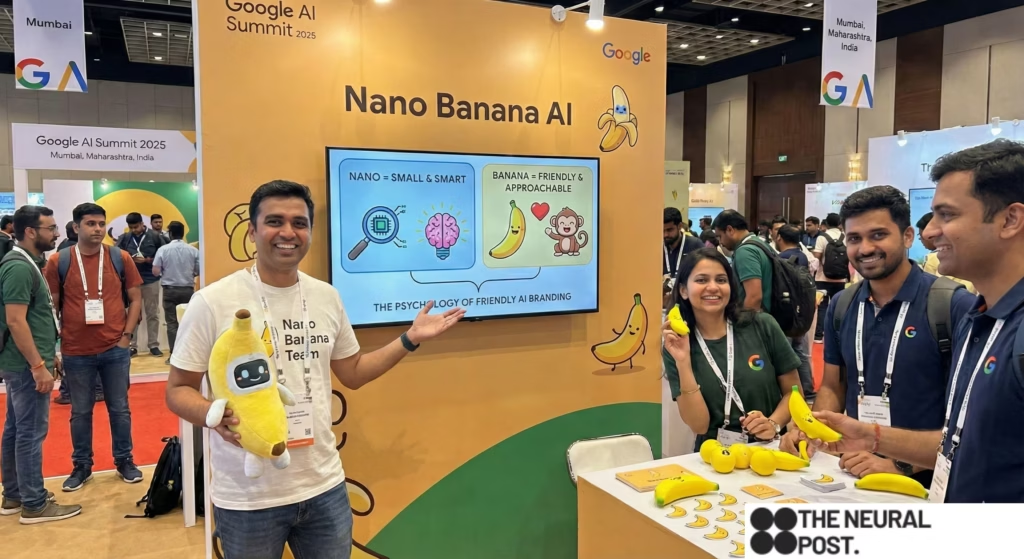
Here is the autopsy of an industry that got too comfortable being mediocre, and why “Synthetic Stock” is the new reality for 90% of marketing.
The Velocity of “Good Enough”
The stock photo industry didn’t die because AI got better than human photographers. Annie Leibovitz is safe. National Geographic photographers are safe.
Stock died because it was never about art. It was about utility filler.
Marketing is a hungry beast. Every day, agencies like mine need to feed the beast with Instagram posts, LinkedIn headers, newsletter graphics, and blog feature images. These are our “Daily Needs.”
For these daily needs, the quality bar isn’t “Masterpiece.” The quality bar is “Does it stop the scroll without looking embarrassing?”
For decades, stock sites were the only way to clear that bar quickly. They had a monopoly on convenience. But they abused that monopoly. Their search engines were terrible. Their pricing was opaque. And their content was deeply, profoundly cringe-inducing.
Enter generative AI.
In 2023, Midjourney v5 crossed the uncanny valley. Suddenly, the hands had five fingers. The eyes looked at the camera.
By 2025, with models like Nano Banana Pro and Black Forest Labs’ Flux, the speed and control became absurd.
The killer feature wasn’t just realism; it was brand alignment.
In the old days, if a client had a strict brand color palette of teal and orange, I had to hunt for stock photos that accidentally contained those colors, or spend hours in Photoshop recoloring shirts.
Now, I just prompt it. “Make the coffee cups teal. Make the background orange accents.”
I can generate 50 variations during a 30-minute client Zoom call. If the client says, “Can we make the team look a bit younger?” I don’t have to scrap the photo and start searching again. I just hit “Vary Region” in the Nano Banana interface, circle the faces, type “younger,” and it’s done in seconds.
The velocity is intoxicating. We have moved from a “Search and Settlement” workflow to a “Create and Iterate” workflow. Once you experience that speed, you cannot go back to typing keywords into a search bar and hoping for the best.
The Diversity Dilemma Solved (Cynically)
There is an uncomfortable truth about why corporate clients love AI stock: it solves the “DEI Checklist” instantly.
For years, finding genuinely diverse stock photography that didn’t look forced was a nightmare. You would search for “diverse business team” and get the same five photos of the same perfectly balanced group of models doing the same unnatural handshake. It looked performative because it was.
Clients are terrified of getting this wrong. They want their marketing to reflect the real world (or at least, the aspirational world their HR department demands).
Nano Banana Pro has mastered the “Corporate Memphis” aesthetic of diversity. It understands how to generate crowds that are ethnically balanced, include various body types, and show visible disabilities, all in a way that feels “natural” within the context of a marketing image.
Is it cynical? Yes. We are using a machine to synthesize human diversity to sell software. It feels deeply dystopian when you stop to think about it.
But at 11:00 PM before a deadline, I am not a philosopher. I am a Creative Director who needs a photo that won’t get the CMO fired. The AI gives me that safety net instantly. The stock sites made me work for it. In the corporate world, friction is death.
The Legal Hangover: Why We Trust the Big Guys
So, why haven’t Getty and Shutterstock sued Google into oblivion?
They are trying. But the ground has shifted under their feet.
In 2024, there was tremendous anxiety among my clients about using AI images. “Is it copyright infringement? Will we get sued by a photographer?”
Then came the Adobe Firefly pivot.
Adobe realized that the only way to win enterprise clients was to guarantee safety. They trained their model, Firefly, exclusively on Adobe Stock images that they had the rights to. They told the world: “Our model doesn’t steal. It’s ethically sourced.”
Then Google and Microsoft followed suit, offering IP Indemnification. They basically said to enterprise customers: “Use Nano Banana. If anyone sues you for copyright infringement because of an image it generated, we will pay the legal bills.”
That was the game-changer.
My agency’s lawyers don’t care how the sausage is made. They care about who pays if someone gets food poisoning. Once Google promised to pay, the floodgates opened.
The tragic irony is that Adobe used its own contributors’ stock photos to train the model that is now replacing them. They paid the photographers pennies in royalties to build the machine that made those royalties obsolete.
Now, when we need a “safe” image, we use Firefly or Nano Banana. We don’t touch the open-source models like Stable Diffusion for client work because the legal provenance is too murky. The “synthetic stock” market has consolidated around the players who can afford the insurance.
The Aftermath: A Bifurcated Visual World
So, where does this leave us?
I still hire photographers. But the nature of the engagement has changed completely.
I hire photographers for Specific Reality.
- If we are launching a new physical product, I need a photographer to shoot that actual product. The AI can’t hallucinate a truthful photo of a prototype that doesn’t exist on the internet yet.
- If we are doing a profile on the CEO, I need a portrait photographer. I can’t use an AI generation of “Generic CEO.”
Photography is becoming a luxury good. It is for the “Hero Assets”—the homepage banner, the Super Bowl ad, the annual report cover.
For everything else—the daily churn of social media, blog posts, internal presentations—it is 100% Synthetic Stock.
The $4 billion stock photo industry is evaporating. Getty and Shutterstock are desperately trying to pivot into becoming AI platforms themselves, but they are too late. Why would I pay Getty a subscription to use their AI generator when Nano Banana is already integrated into my Google Workspace and costs pennies?
I feel a pang of guilt about it sometimes. I know many talented stock photographers who saw their income vanish overnight in 2025. They were good people providing a valuable service.
But technology is unsentimental. The horse and buggy drivers were good people too.
Last week, I needed a photo of a “Cyberpunk Santa Claus delivering gifts with a drone in Neo-Tokyo” for a holiday client newsletter.
In 2022, that would have been a $5,000 custom photoshoot that would take three weeks to organize.
With Nano Banana, I had it in 30 seconds. It looked incredible. The client loved it.
The stock photo is dead. Long live the prompt.