

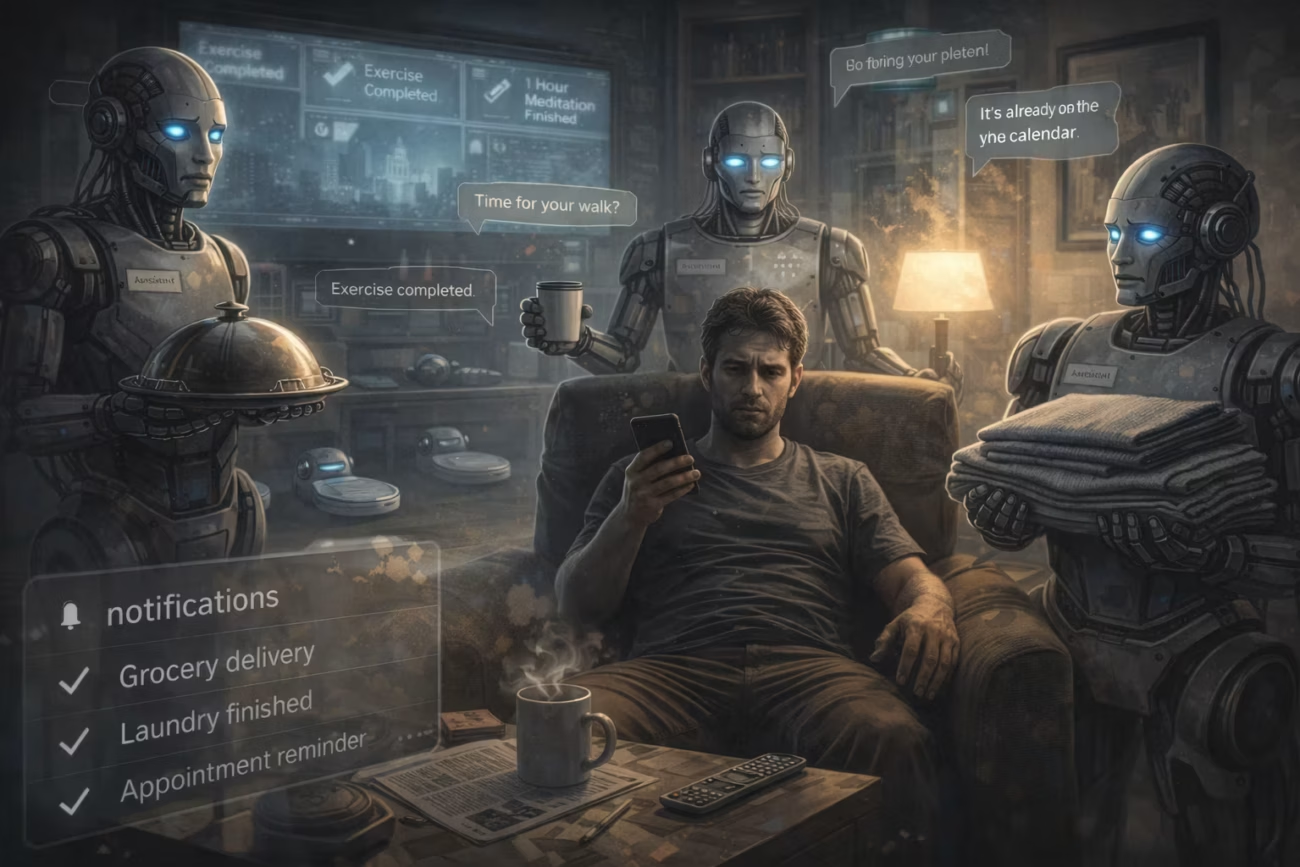
By a Grumpy Humanist
I watched the Google “LifeOS” keynote last week. You probably saw it. The one where the smiling executive stood in a mock kitchen and demonstrated the “frictionless morning.”
The lights faded up gently at 7:00 AM because the AI sensed the user’s REM cycle ending. The coffee maker hissed to life automatically. The smart fridge—equipped with the new Nano Banana Vision cameras—noticed the milk was low and silently ordered a fresh carton from a drone delivery service. The user’s phone buzzed with a pre-optimized itinerary for the day, rescheduling a meeting because the AI noticed traffic patterns were heavy.
The audience cheered. The tech press wrote headlines about the “Magic of the Invisible Butler.”
I sat there, watching this paradise of automation, and I felt a cold knot of dread form in my stomach.
I realized I didn’t want any of it.
I don’t want my fridge to buy my milk. I don’t want my calendar to manage my friendships. I don’t want a “frictionless” life.
We are currently sleepwalking into an era of “Daily Needs” AI—technology designed to outsource the boring, repetitive maintenance of being alive. And while it sells itself as the ultimate convenience, I argue it is actually the ultimate form of infantilization.
We are building a world where we are treated like toddlers in a high-tech nursery, protected from the terrible burden of having to choose our own dinner.
Here is why the “Smart Home” dream feels like a dystopian nightmare, and why I’m fighting to keep the friction in my life.
1. The Death of Agency (The Wall-E Effect)
The core pitch of “Daily Needs” AI is that it frees you from drudgery so you can focus on “what matters.”
“Why waste time picking out groceries?” the ads say. “Let the algorithm do it.”
But there is a subtle, terrifying shift that happens when you hand over the shopping list to a machine. You stop being the Actor and become the Approver.
When I go to the grocery store, I make a hundred micro-decisions. I look at the apples. I see a weird new hot sauce. I decide, on a whim, to try cooking eggplant tonight. I am actively engaging with my environment and deciding how to fuel my body.
When the Instacart AI handles it, that agency vanishes. The AI looks at my past consumption data. It sees I bought pasta sauce last week. It buys pasta sauce again. It optimizes for consistency.
It doesn’t know that today I feel adventurous. It doesn’t know that I’m trying to impress a date. It only knows what the “Statistical Average Me” eats.
Over time, this creates a feedback loop of mediocrity. The algorithm feeds you what you like, so you like what it feeds you, so it feeds you more of it. You become a passenger in your own life, strapped into a chair, fed a steady diet of “Probable Preferences” while your capacity to choose atrophies.
This is the Wall-E Effect. We aren’t becoming fat and lazy because of hover-chairs; we are becoming spiritually flabby because we have outsourced the muscle of volition.
2. The Algorithmic Rut (The End of Serendipity)
Efficiency is the enemy of discovery.
A “Daily Needs” AI is built to optimize. It wants to get you the cheapest milk, the fastest route, the most nutritious meal. It hates variance.
But human joy is found in variance.
I found my favorite coffee shop because I took a “wrong” turn on the way to work. An AI navigator would never have let me take that turn. It would have re-routed me to save 2 minutes.
I learned to cook risotto because I accidentally bought the wrong type of rice and had to figure out what to do with it. An AI shopper would never have made that mistake.
When we let algorithms pave our paths, we eliminate the potholes, but we also pave over the flowers. We live in a hyper-optimized tunnel.
- Amazon Q Personal will never suggest a book that challenges your worldview; it will suggest a book that aligns with your purchase history.
- Spotify AI will never play a jarring, dissonant track that grows on you; it will play “Chill Lo-Fi Beats” because that keeps you subscribed.
A frictionless life is a life without texture. It is smooth, perfectly predicted, and utterly boring.
3. The Surveillance Tax (The Panopticon Kitchen)
Let’s talk about the price of this butler.
To make the “Smart Kitchen” work, the AI needs to see everything.
- To know you are out of eggs, the fridge needs cameras.1
- To know you are stressed and need a relaxing playlist, the watch needs to track your heart rate.2
- To know you are awake, the bedroom speaker needs to listen to your breathing.
We are inviting a corporate panopticon into our most intimate spaces, all to save five minutes of effort.
Amazon and Google aren’t building these tools because they love you. They are building them because Behavioral Data is the new oil.
Knowing what you search for is valuable. Knowing when you run out of toilet paper is priceless. It allows them to predict your consumption before you even know it yourself.
I don’t want a camera in my fridge. I don’t want a sensor in my toilet analyzing my microbiome (yes, that’s a real startup). I want the sanctity of a home that is dumb, silent, and blind. I want a space where I can be a human being, not a data point generating revenue for a cloud provider.
4. The Competence Crisis (The Helpless Adult)
There is a dignity in chores.
I know, that sounds like something a Puritan would say. But hear me out.
There is a specific, grounding satisfaction in doing the dishes. The water is warm. The plate goes from dirty to clean. You have physically intervened in the universe to restore order.
When we outsource every maintenance task to a robot, we lose our connection to the physical reality of our lives. We become “Brains in Jars,” floating from screen to screen while unseen machines wipe our counters and fold our clothes.
This creates a Competence Crisis.
If the AI orders the food, cooks the food (in a smart oven), and cleans the dishes, do you still know how to run a household?
If the AI navigates you everywhere, do you still know where North is?
If the AI writes your emails, do you still know how to apologize?
We are raising a generation of adults who are technically “Hyper-Productive” but functionally helpless. If the Wi-Fi goes down, they starve. If the server crashes, they are lost.
Dependency is a drug. The more we use the AI butler, the more we need the AI butler. We are voluntarily putting on handcuffs because they are lined with velvet.
5. Friction is the “Texture” of Time
Finally, I argue that “friction” is actually what makes time feel meaningful.
Have you ever had a day where you sat on the couch, scrolled TikTok, ordered UberEats, and binge-watched Netflix?
At the end of that day, you feel gross. You feel like time evaporated. Why? Because there was no friction. It was a slip-n-slide of consumption.
Now compare that to a day where you cooked a complicated meal, fixed a leaky faucet, and walked to the store in the rain.
That day feels long. It feels earned. You remember it.
Friction—the resistance of the world against your will—is what gives life its weight.
- Picking a ripe avocado is friction. You have to squeeze it. You have to judge.
- Chopping an onion is friction. It makes you cry.
- Walking to the coffee shop is friction.3
These moments force you to be present. They force you to inhabit your body.
The “Daily Needs” tech wants to reduce your life to a series of button presses. Click. Food arrives. Click. Entertainment plays. Click. Lights off.
It turns life into a user interface. But I don’t want to live in a UI. I want to live in the world.
Conclusion: Reclaiming the “Boring”
So, I am making a radical choice in 2026.
I am firing the butler.
I turned off the “Smart Reorder” on my Amazon account.
I disconnected my fridge from the Wi-Fi. (It beeped angrily for three days, then gave up).
I deleted the AI scheduling agent.
And you know what? It’s annoying.
I ran out of milk yesterday. I had to put on shoes, walk to the corner store, and buy milk. It took 20 minutes.
But on the way, I saw a weird dog. I felt the cold wind on my face. I nodded to the guy at the counter.
I was a human being existing in the physical world, solving a small problem with my own two hands.
The tech companies call that “inefficiency.”
I call it living.
We have to decide what human life is for.
Is it for maximum throughput? Is the goal to get to the grave with the most optimized calendar and the fewest wasted minutes?
Or is the point to do things? To care for ourselves? To touch the world?
I don’t want an AI to live my life for me. I want to do the dishes. I want to pick the bad avocado. I want the friction.
Because the friction proves I’m still here.